

Article Summary
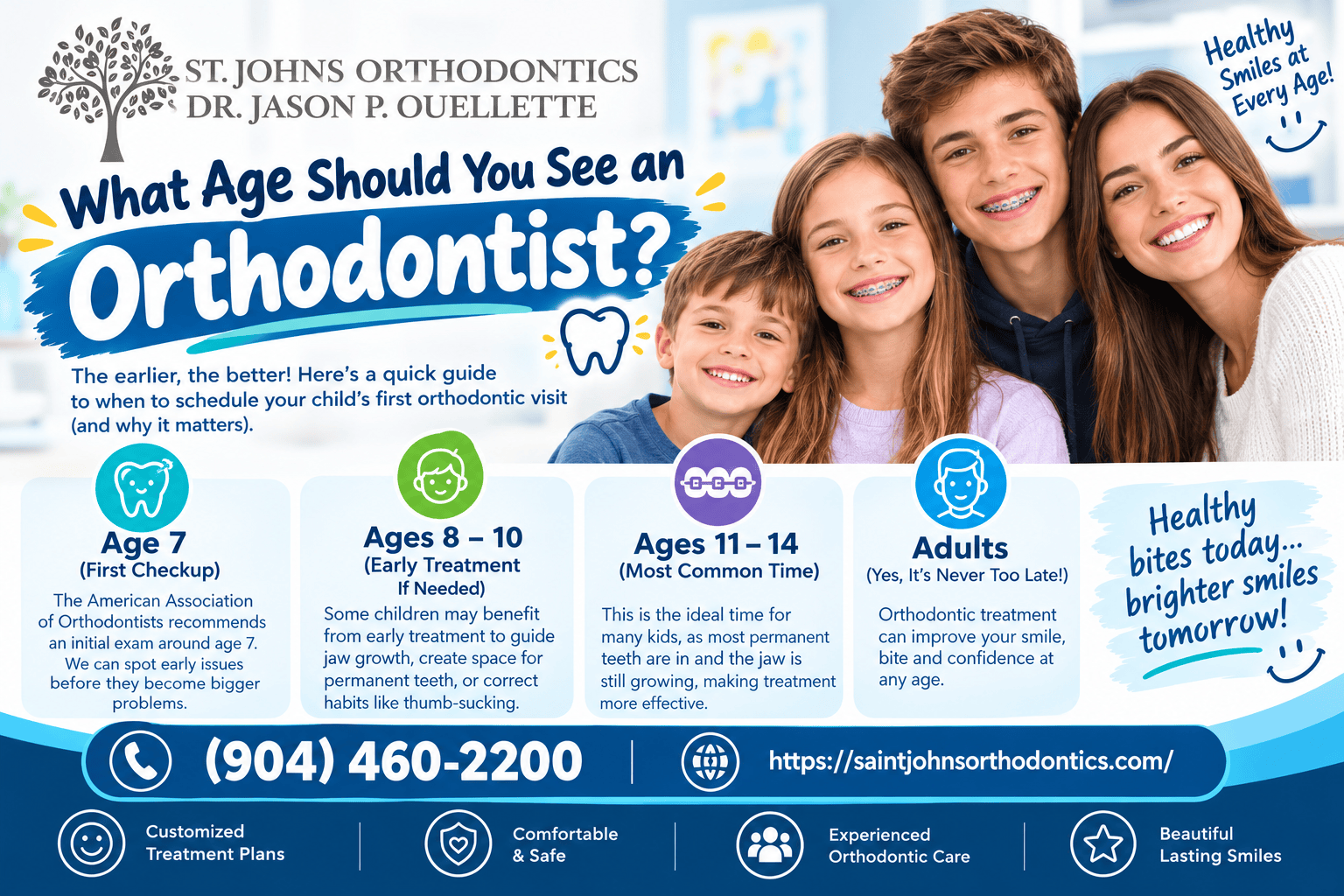
The American Association of Orthodontists recommends a child’s first orthodontic appointment by age 7. Kids at this age have a mix of baby and permanent teeth, allowing the orthodontist to detect bite or jaw issues while the jaw is still developing. Most children, about 85%, are monitored only, while a minority benefit from early orthodontic treatment. Treatment is typically begun at the full age of the teen, when most permanent teeth have appeared. For adults, orthodontic treatment can begin at any age, but only if a checkup confirms them as a good candidate.
What Age Should You See an Orthodontist?
While most children will not require braces, the first orthodontic appointment should occur by age 7 according to the American Association of Orthodontists. Full orthodontic treatment usually begins when a teen is between 11 and 15 years old, when most permanent teeth have grown in, and their jaw has reached the size needed for a complete plan. Good oral health matters more than the age of an adult’s first orthodontic treatment; get treatment started anytime! The best age for this depends on what you are looking to achieve, whether it’s catching an early bite problem, straightening a teenager’s smile or simply getting something right for years that you have wanted to.
Whether you are considering the best age for braces, from your child’s first orthodontic screening to adult orthodontics later in life, this guide will help you know exactly when to schedule your first orthodontic consultation.
Why Does the American Association of Orthodontists Recommend Age 7?
The best time for a first orthodontic evaluation is age 7, a transitional period in dental development.
Mixed Dentition and Jaw Growth
This is a time when most children have a combination of mixed teeth, baby teeth and their first permanent teeth. This mix gives an orthodontist a good understanding of jaw development and whether the bite is progressing to the correct position.
Spotting Problems Early
Early orthodontic screening can detect a crossbite, crowding or an abnormal permanent tooth eruption in advance of its growing severity. While treatment may not always start immediately, early detection does not mean losing the opportunity.
Planning for Phase 1 and Phase 2 Treatment
When an early orthodontic treatment (interceptive orthodontics) is needed, it is typically combined into two stages – an early Phase 1 for guidance of jaw growth, and a Phase 2 with the arrival of the more permanent teeth. Most children, about 85%, don’t need this early intervention and are simply monitored with checkups as they grow.
What Are the Signs Your Child Needs Braces Early?
There are a few simple signs at the beginning of a bite or jaw problem that should be addressed instantly. If a child loses a baby tooth too early or too late, they may have trouble chewing or biting their food, or they may continue to suck on their thumb or breathe through their mouth; it’s worth talking to a pediatric orthodontist.
Other symptoms include crowded front teeth, clicking or noisy jaw movement, and teeth that don’t fit together when your child bites down. None of these indicates your child definitely needs braces; they are just reasons to schedule an orthodontic checkup.
The following is a brief overview of the events that will probably occur at each stage:
Age Group |
What Typically Happens |
Why It Matters |
| Around Age 7 | A first orthodontic screening checks jaw growth and how permanent teeth are coming in alongside baby teeth. | Catches crossbites, crowding, or spacing issues while the jaw is still easy to guide. |
| Teen Years (11–15) | Most permanent teeth have come in, making this the typical window for full braces or clear aligners. | Comprehensive treatment can address bite, crowding, and alignment in one connected phase. |
| Adulthood (18+) | An orthodontic evaluation reviews current alignment, past treatment, and any shifting that’s happened over time. | Treatment works at any age, though it may take a bit longer than it does for teens. |
When Should Teens See an Orthodontist?
Most teens are ready to see an orthodontist for complete treatment when around 60% of their permanent teeth are in place, normally between the ages of 11 and 15.
Best Age for Braces in the Teen Years
There is no single best age for braces, since every teenager’s teeth alignment and jaw growth differ. The best way to decide when to start is to get an orthodontic evaluation as soon as you notice crowding, spacing, or a bite issue.
Common Reasons Teens Need Braces
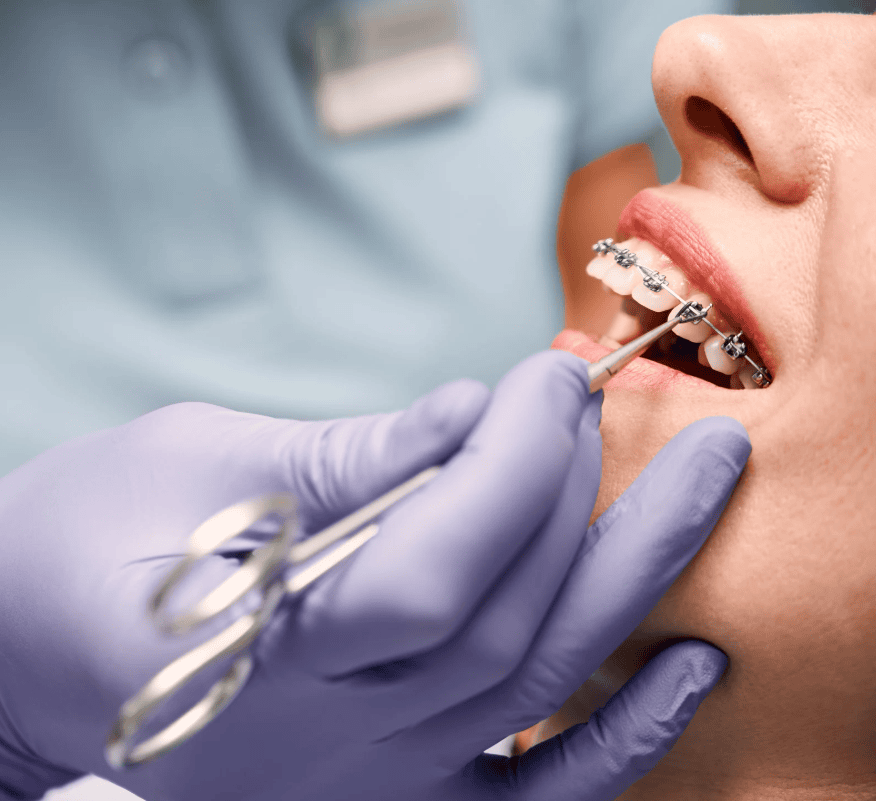
Braces for teenagers correct problems with misaligned, crowded teeth, gaps, or a bite that causes the top and bottom teeth to not meet properly. The options are all available, including traditional metal braces, ceramic braces, and clear braces such as Invisalign, and an orthodontist for teens will be able to discuss with you which one will work best.
Is It Too Late for Adults to See an Orthodontist?
Seeing an orthodontist as an adult can be great, and age is never a barrier to treatment. What matters most is healthy teeth, gums, and supporting bone. Many adults get orthodontic treatment well into their 40’s, 50s, and beyond. Adult orthodontics may be a bit longer than treatment for teens because the adult jaw bones have stopped growing, and teeth move more slowly.
What to Expect from Adult Orthodontics
An orthodontist for adults will first do a full orthodontic evaluation of your teeth, check your bite, your jaw, and how your teeth and gums are, and then they will tell you the plan. Traditional metal braces, ceramic braces, and clear aligners are all options, depending on your case and daily life.
Braces for Adults vs. Braces for Teens
Braces for adults work the same as braces for teenagers, with steady pressure to move teeth slowly into place over time. The main difference is mostly treatment duration and, in some cases, the need to address all braces issues that were never fully fixed.
Frequently Asked Questions
What age does the AAO recommend for a first orthodontic visit?
The American Association of Orthodontists says a first orthodontic visit by age 7, even if there is no need for braces yet. At this early checkup, an orthodontist can monitor jaw growth and permanent tooth eruption.
What is the best age for braces as a teenager?
Most teens are ready for full treatment somewhere between ages 11 and 15, once most permanent teeth have come in. The exact timing will be decided based on your child’s tooth alignment and jaw growth.
Can adults get braces at any age?
Adults can start orthodontic treatment at any age, because healthy teeth and gums matter more than age. Treatment may take a little longer than for teens, but it still works well.
What are common signs a child needs an early orthodontic checkup?
Early or late loss of baby teeth, chewing problems, crowded front teeth, and thumb sucking or mouth breathing habits are all worth mentioning to an orthodontist. These signs don’t mean sure treatment, but it’s worth checking.
What happens during a first orthodontic consultation?
An orthodontist will check teeth, jaw, and bite, sometimes with X-rays or photos, to check dental development and spot issues. They will tell you if treatment is needed now or if it’s better to wait and watch.
Final Thoughts
The right age to see an orthodontist really depends on where you are in life: around age 7 for a first check, early to mid teen years for full treatment, and any age for adults ready to make a change. Catching an issue early can make treatment easier later, but it’s never too late to start, whether you are a parent watching for signs or an adult who put off treatment for years. St. Johns Orthodontics, led by Dr. Jason Ouellette, welcomes patients of every age for orthodontic evaluation and honestly guides you through every step.
If you’re ready to find what stage you or your child is at, contact us and schedule your consultation now!
Schedule a Consultation Today!

St. Johns Orthodontics


A Smile Can Change Everything
Braces & Invisalign for kids, teens & adults in St. Augustine, FL. Affordable monthly payments — get started today!
Request Free Consult