


If you have mild to moderate problems, adults in St. Augustine might want Invisalign for a discreet, removable option. Traditional braces may be a better option for severe misalignment or complex tooth movements. Your best option depends on how complex your teeth are and what fits best into your everyday routine. You will also need to choose whether you can wear removable trays as recommended.
Both treatments straighten teeth. But both feel and work very differently. This article explains how each option works, how comfortable it is, and what dental problems it can help with. We will also cover treatment times and how to keep your teeth clean during the process. This way, you will know what to ask during your visit and which option will best suit your daily life.
What Is the Difference Between Invisalign and Braces?
Invisalign uses clear plastic trays that may be removed when needed. Traditional braces use brackets and wires that stay on your teeth until the treatment is completed. They look different and affect how you eat and clean your teeth. They may also need different lengths of time to straighten your teeth. The table shows the main differences between the two options.
Feature |
Invisalign (Clear Aligners) |
Traditional Braces |
| Appearance | Nearly invisible clear trays | Visible metal brackets and wires, or ceramic options |
| Removability | Removable for eating, drinking, and cleaning | Fixed to the teeth until treatment ends |
| Daily wear | 20 to 22 hours a day | Constant, since they stay attached |
| Food rules | None, as you remove trays to eat | Avoid hard, sticky, and chewy foods |
| Cleaning | Normal brushing and flossing after removing trays | Special flossers and extra care around wires |
| Office visits | Usually every 5 to 6 weeks | About every 6 weeks, plus repairs |
| Best suited for | Mild to moderate crowding, spacing, and minor bite issues | Severe misalignment, complex rotations, and major jaw differences |
| Typical length | Around 9 to 18 months, sometimes as little as 6 months | About 18 to 24 months |
These are only estimations. Your orthodontist may give you a treatment plan based on your dental needs.
How Does Invisalign Work for Adults?
Invisalign uses a series of customized clear trays to slowly move your teeth. Each tray is slightly different from the last. Your orthodontist will tell you when to switch to the next set. You will need to wear them for 20 to 22 hours a day. Because the trays are removable, you can remove them only to eat, drink anything but water, and brush.
How Do Traditional Braces Work?
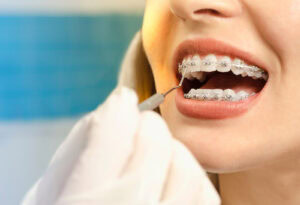
Traditional braces use brackets attached to your teeth and a wire that puts steady pressure. At regular visits, your orthodontist adjusts the wire and slowly moves your teeth into place. Because braces are always on your teeth, they work without you having to do anything every day.
Invisalign vs. Braces: Which Is More Comfortable?
Invisalign is usually more comfortable day to day because the trays are smooth and removable. Braces can irritate your cheeks and lips, especially during the first few weeks. Both can cause mild soreness when you switch to a new tray or get your braces adjusted. Your comfort also depends on your case and how well you handle the soreness.
With braces, you can use wax to cover rough spots, and the soreness usually fades within a few days after each adjustment. However, with Invisalign, you may feel some pressure for a day or two whenever you switch to a new tray. None of these options should cause severe pain. If something feels wrong or a wire pokes your cheek, call your orthodontist.
Which Treatment Is Better for Different Orthodontic Problems?
Invisalign usually works well for mild to moderate crowding, spacing, and minor bite issues. Braces may be a better fit if your teeth are badly misaligned, twisted, or affected by major jaw issues. Because every bite is different, your orthodontist will decide after scanning your teeth.
Crowded or Crooked Teeth
Invisalign is commonly used to treat mild to moderate crowding. Braces are usually necessary if you have severe crowding or poorly aligned teeth because they help with more controlled movement.
Gaps Between Teeth
Many adults use Invisalign to treat gaps because it works in many cases. However, braces may still be necessary for large gaps or those linked to jaw issues.
Overbite, Underbite, and Crossbite
Invisalign may work for minor bite issues. If you have serious overbites, underbites, and crossbites, you may need braces, sometimes with other appliances. A bite exam helps your orthodontist choose the safest, most effective treatment for you.
Invisalign vs. Braces: Appearance and Convenience
When you wear Invisalign, you will barely notice it. You can also remove the trays at mealtimes, so you can eat without restrictions. Braces are simple to manage because they stay on your teeth all day. You do not have to remember to put them in or take them out. Your choice depends on how much you value looks or convenience.
If you talk to clients all day or attend lots of events, clear aligners may feel like a more comfortable option. If you often forget to wear your aligners, braces can make things easier. Ceramic braces are another less noticeable option that stays in place, but they can break more easily.
How Do Invisalign and Braces Compare in Treatment Time?
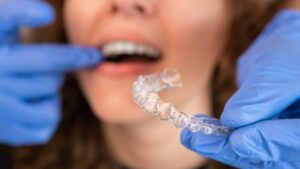
Invisalign usually takes 9 to 18 months, though some cases can take as little as 6 months. Braces might take anywhere from 18 to 24 months. Complex cases may take longer to complete using both options. Wearing your Invisalign trays as suggested helps keep your treatment on track.
According to Invisalign, adult treatment usually takes about 12 to 18 months. These timelines are only estimates. For complex cases, the difference in treatment time may be small or disappear altogether. If you do not wear your Invisalign trays enough, it can add months. Broken brackets can also delay braces treatment, so it is important to take care of both.
What Should Adults Know About Cleaning Their Teeth During Treatment?
Adults should clean their teeth after every meal and floss daily. They should also clean carefully around braces or aligners to avoid plaque buildup, cavities, and white spots on their teeth. You can brush and floss normally after using Invisalign. Braces take more time to clean because you have to work around the wires and brackets.
Many patients don’t realize how important it is to keep their teeth clean. According to a Texas A&M College of Dentistry report, 23.4% of 885 orthodontic patients had at least one white spot on their teeth while undergoing treatment. Poor oral hygiene is an important risk factor. Clean your aligners daily and wash your teeth before putting them back in.
How to Choose Between Invisalign and Braces in St. Augustine
Invisalign may be a good fit if you want a less visible option. You can remove trays to eat, but you need to wear them for 20 to 22 hours a day. Braces may be a better fit if you have a serious bite problem or badly twisted teeth. They stay in place all day, so you do not have to remember to wear them. A consultation with your orthodontist can help you decide which option is right for you.
Always be honest about your daily habits. The best treatment is the one you can stick with until the end. At St. John’s Orthodontics, we check your teeth and explain both options. We also help you choose the one that fits your bite and lifestyle. Book a consultation to get a treatment plan that suits your needs.
Frequently Asked Questions
Is Invisalign Better Than Braces for Adults?
Invisalign can be a good option for adults with mild to moderate dental issues. It is also a good choice if you want something less visible. Braces usually work better for more complex dental problems.
Can Adults Get Braces at Any Age?
Adults can get braces at almost any age, as long as their teeth and gums are healthy. A dental exam can help confirm if you are ready.
Is Invisalign Easier to Clean Than Braces?
Invisalign is usually easier to keep clean. Because you can remove the trays and brush and floss as usual. Braces take more time to clean, and you may need special tools.
Can Invisalign Treat Severe Orthodontic Problems?
Invisalign can work for some moderate cases. But severe misalignment or major jaw differences often need braces. Your orthodontist will tell you which option is best for you.
Final Thoughts
Invisalign may suit adults who want a less visible, removable option for mild to moderate issues. Braces are often a better fit for severe or more complex cases. Invisalign usually takes around 9 to 18 months, while braces often take 18 to 24 months. Both also require good oral hygiene throughout treatment. Your bite, daily routine, and how well you follow instructions can help you decide which option is right for you.
St. John’s Orthodontics helps adults in St. Augustine compare Invisalign and braces so they can feel confident about their choice. Schedule your consultation with St. John’s Orthodontics today.

St. Johns Orthodontics

A Smile Can Change Everything
Braces & Invisalign for kids, teens & adults in St. Augustine, FL. Affordable monthly payments — get started today!
Request Free Consult