

Article Summary
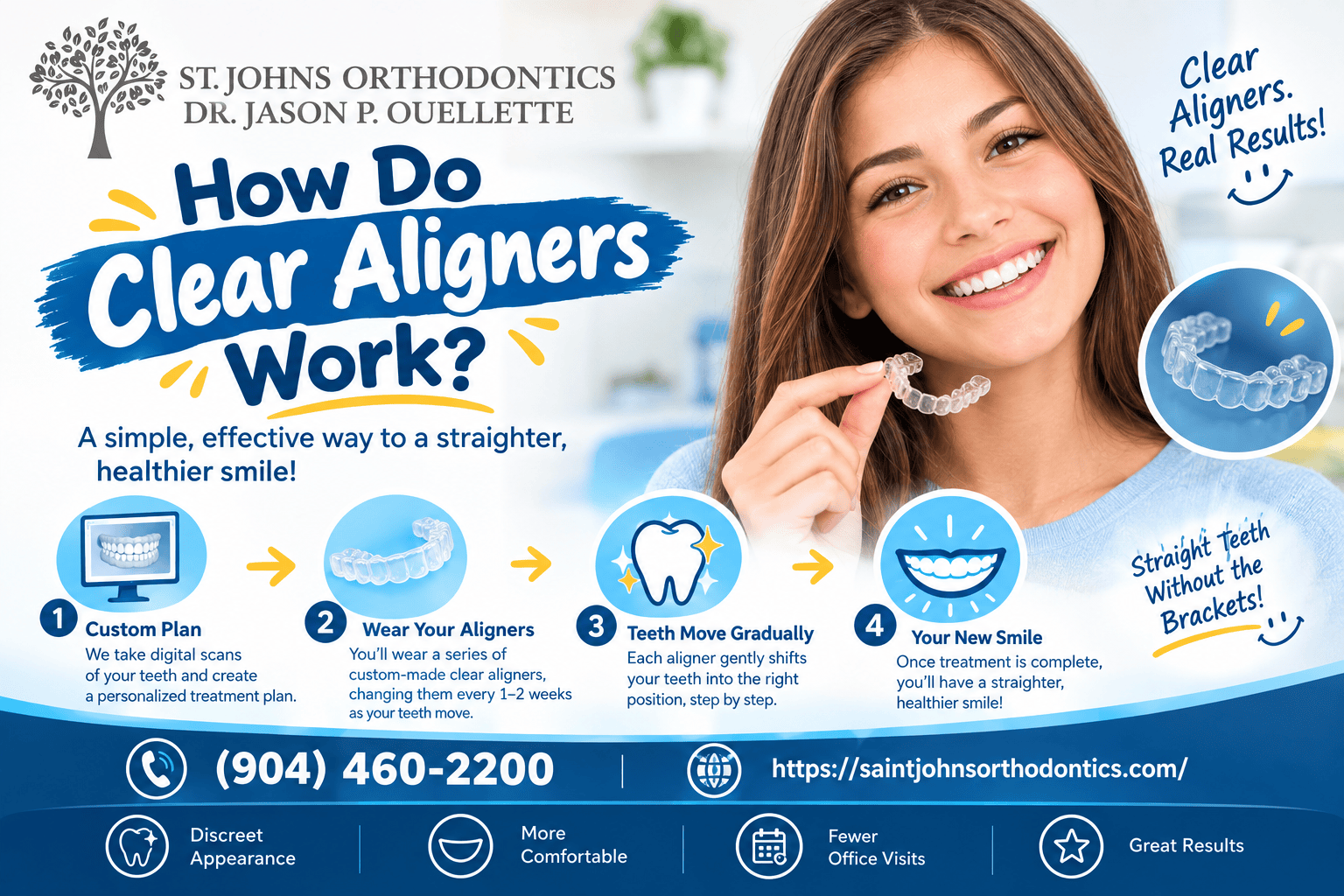
Clear aligners work by using digital treatment planning plus a set of custom trays that give gentle, steady pressure to move your teeth over time. The process depends on wearing your trays 20 to 22 hours a day, changing them on time, and going to your follow-up visits. Most people with crowded teeth, gaps between teeth, or a mild bite issue see great results with clear aligner treatment. But more complex cases still need traditional braces. An orthodontic consultation is the best way to know if clear aligners suit your smile.
How Do Clear Aligners Work?
If you think about how clear aligners work, the short answer is that they use steady, gentle pressure with no metal wires and brackets to move your teeth. Clear aligners like Invisalign have become the most popular way to fix crowded teeth, close gaps between teeth, and correct a bite. You won’t have the look of traditional braces. Instead of tightening wires every few weeks, your orthodontist gives you a series of custom trays that slowly shift your teeth. This guide explains how clear aligner treatment works, from your first 3D scan to your final tray, so you know what to expect before your orthodontic consultation.
How Do Clear Aligners Work?
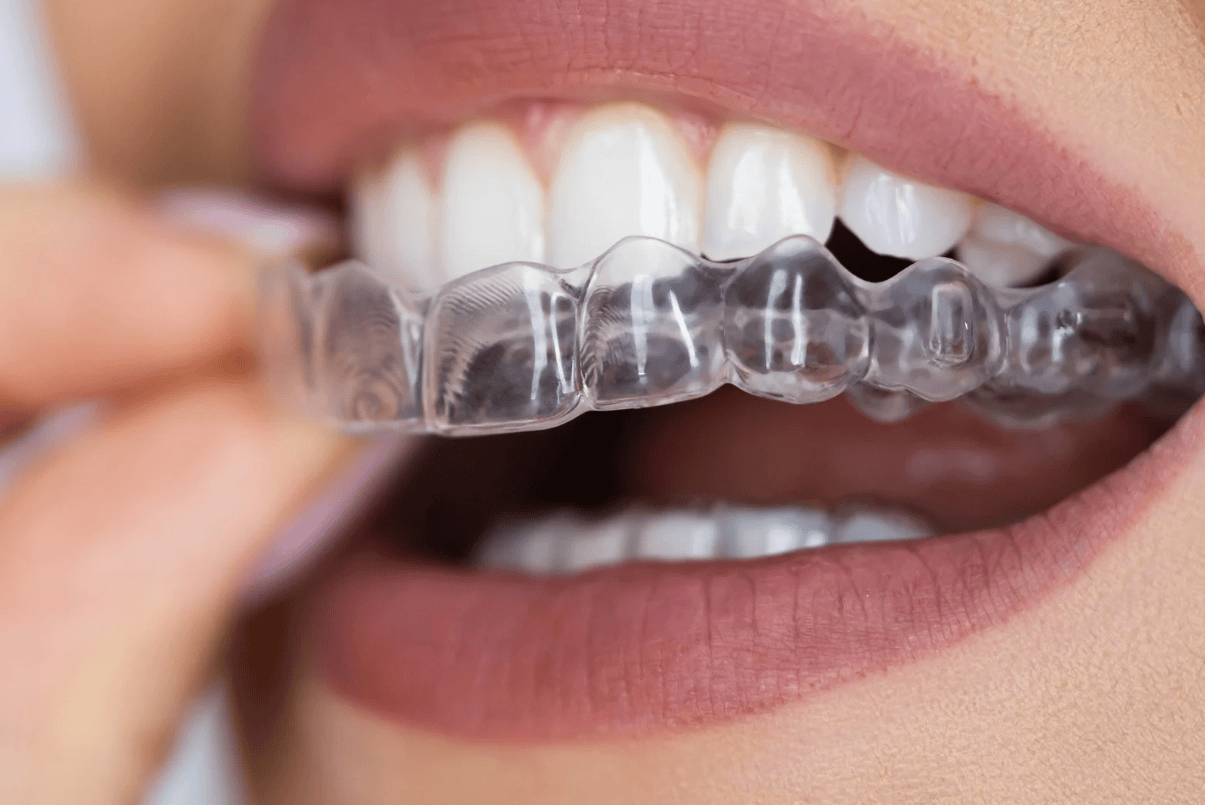
Clear aligners work by applying light, continuous pressure with a set of custom-made plastic trays. Each one moves your teeth a little closer to their final spot. Your orthodontist plans the whole process with 3D digital scanning, mapping out exactly how each tooth should move before you even wear your first tray.
As you change to a new tray about every one to two weeks, the pressure tells the ligament around each tooth to reshape the bone around it, letting the tooth move safely into place. By the time you get to your last tray, your teeth have moved through small, planned steps instead of one big change.
What Happens During the Clear Aligner Treatment Process?
The clear aligner treatment process consists of clear stages, from your first visit to your final tray.
Digital Planning and 3D Scanning
The first step in your treatment is a digital scan of your teeth, gums, and jaw using 3D imaging technology. It helps your orthodontist build a digital treatment plan that shows your tooth movement from your current smile to your final result, tray by tray.
Custom Aligner Trays
Once your plan is ready, a lab makes your series of custom clear aligner trays from your scan. Each tray moves your teeth about a quarter of a millimeter, and the pressure remains light and easy to manage.
Gentle Pressure and Tooth Movement
Wearing each tray gives steady, focused pressure to certain teeth, helping them shift in a controlled way. This slow, planned tooth movement is what makes clear aligners different from a removable retainer, which is made to keep your teeth in place instead of moving them.
Bone Remodeling Explained
The pressure from your aligner tells the ligament around each tooth to break down bone on one side and build it on the other. This natural process, called bone remodeling, lets your teeth move safely without hurting the roots or gums.
How Long Do Clear Aligners Take to Work?
Clear aligner treatment usually takes a few months to about two years, depending on how much your teeth need to move. Mild cases such as small gaps between teeth or slightly crowded teeth often finish faster. For more bite correction, treatment takes longer because it requires more trays and more time for each tooth. You will usually switch to a new tray every one to two weeks. This is because most people notice changes within the first few months of wearing clear aligners.
Following is a quick look at how the clear aligner treatment process usually goes:
Stage |
What Happens |
Typical Timeframe |
| Digital Scanning & Planning | We scan your mouth with 3D imaging and create a digital treatment plan. | Usually completed in one visit |
| Custom Tray Fabrication | We manufacture your series of custom clear aligner trays based on your scan. | About 1 to 3 weeks |
| Wearing & Switching Trays | You wear each tray 20 to 22 hours a day, then switch to the next tray in the series. | Every 1 to 2 weeks per tray |
| Follow-Up Visits | Your orthodontist checks your progress and adjusts your plan if needed. | Every 6 to 8 weeks |
What Should You Expect From Daily Wear and Care?
Daily wear and care matter a lot in your results, more than anything else in clear aligner treatment.
Wear Time
According to most orthodontists, you should wear your aligners for 20 to 22 hours a day. Take them out only to eat, drink anything besides water, brush, and floss. If you skip them for many hours, tooth movement will be slow and can make your next tray not fit well.
Removal and Cleaning
You should take out your trays before every meal and snack, then brush your teeth before putting them back in so food or germs do not get trapped. Cleaning your aligners with a soft brush and warm water keeps them clear and helps them fit right.
Switching to the Next Tray
You will move to the next tray in your series on the schedule your orthodontist gives you, usually every one to two weeks. Sticking to this schedule, instead of changing early or late, keeps your treatment on track.
What Problems Can Clear Aligners Fix?
Clear aligners deal with almost all alignment issues, from simple cosmetic concerns to more serious bite problems. They work well for crowded teeth, crooked teeth, and gaps between teeth, as well as mild to moderate overbite, underbite, and other bite correction needs. According to Align Technology, the maker of Invisalign, clear aligners are used to treat teeth alignment issues at all stages of adulthood, not just for teenagers. Severe jaw problems, big turns, or complex root movement, though, often still need traditional braces so your orthodontist has more control for the best result.
How Effective Are Clear Aligners Compared to Braces?
Clear aligners work very well for mild to moderate teeth straightening. Their success rates are about 75% to 90% for common spacing and crowding cases. The American Association of Orthodontists says that any orthodontic treatment, whether aligners or traditional braces, is successful only when patients follow their orthodontist’s instructions carefully and attend scheduled visits.
Clear aligners also help keep gums healthier during treatment because you can take them out, which makes brushing and flossing easier than with fixed metal brackets and wires. Traditional braces, on the other hand, may still be better for complex bite correction or big tooth rotations that need more control than trays can give.
Frequently Asked Questions
How do clear aligners move your teeth?
Clear aligners move your teeth by using steady, gentle pressure through a set of custom trays, with each tray moving your teeth a small amount. The ligament around each tooth reshapes the bone that holds it, allowing the tooth to move safely.
How many hours a day do you need to wear clear aligners?
Most orthodontists say to wear your aligners for 20 to 22 hours a day, taking them out only to eat, drink, brush, and floss. Wearing them less can slow your progress.
Can clear aligners fix crooked teeth and gaps between teeth?
Clear aligners work well for crowded teeth, crooked teeth, and gaps between teeth, for many mild to moderate bite problems. Complex cases with major rotations or jaw issues may still need regular braces.
Are clear aligners as effective as traditional metal braces?
Clear aligners are effective for mild to moderate cases, having success rates between 75 and 90 percent. Traditional braces are still best for more complex bite correction or tooth movement.
Do clear aligners hurt?
Clear aligners can cause mild pressure or soreness for the first day or two after changing to a new tray, which means your teeth are moving. This feeling is usually much lighter than what some people feel with regular braces.
Final Thoughts
Clear aligners mix digital planning with a set of custom trays that slowly guide your teeth into place over time. With regular wear, timely tray changes, and a bit of patience, most people with crowded teeth, gaps between teeth, or a mild bite issue see astonishing results without traditional braces. St. Johns Orthodontics, led by Dr. Jason Ouellette, stands by patients in St. Augustine to help them determine whether clear aligners or another treatment option best fits their smile.
If you are ready to see what clear aligner treatment can do for you, reach out and schedule your consultation right now.

St. Johns Orthodontics

A Smile Can Change Everything
Braces & Invisalign for kids, teens & adults in St. Augustine, FL. Affordable monthly payments — get started today!
Request Free Consult